
Top Signs You Need Gate Repair Service — Don’t Ignore These
A gate that hesitates for two seconds before moving isn’t just a ‘slow gate’ — it’s an operator drawing excess current to overcome a friction problem, and that excess draw is shortening the motor’s life every single cycle. Many homeowners mistake these subtle symptoms for minor annoyances, but in our 11 years of experience right here in Sacramento, we’ve seen these “minor” issues snowball into costly failures. Recognizing the true meaning behind your gate’s behavior is key to preventing expensive repairs down the line. Don’t wait for a complete breakdown; understanding these early warning signs can save you time, money, and headaches.
If you’re dealing with a gate that’s acting up, the good news is that often, a repair is the right answer. If you’d rather not play detective, Next Gen Gate Repair Sacramento offers free estimates. Just give us a call at (279) 239-2652.
The Sound of Trouble: What Your Gate is Telling You
Gates, especially automated ones, can be surprisingly vocal when something’s not right. The sounds they make aren’t random; they’re often direct indicators of specific mechanical or electrical problems. In Sacramento, where we see a variety of gate types and ages, we’ve learned to listen closely. A grinding noise, for example, is very different from a squeal or a clunk, and each points to a distinct potential failure point. Ignoring these auditory clues is like ignoring a check engine light on your car – it’s a signal that something needs attention before it becomes a much bigger, more expensive problem.
- Grinding: This is often the sound of metal-on-metal contact that shouldn’t be happening. It could mean a damaged gear within the operator, a roller that’s off its track and rubbing against the frame, or even debris caught in a crucial moving part. We frequently see this in older systems or gates that haven’t had regular maintenance. In neighborhoods like Arden-Arcade, where gates have seen years of use, grinding can indicate wear on the internal components of the gate motor itself.
- Squealing/Screeching: This high-pitched sound typically points to a lack of lubrication or a worn-out bearing. It could be the gate hinges needing lubrication, but it can also be the bearings within the gate operator or even the wheels. Without proper lubrication, metal parts rub together, causing friction and that tell-tale squeal. This is a common issue we address on gates throughout Sacramento, particularly those exposed to our sometimes dusty climate.
- Clunking/Banging: A sudden, sharp clunk often signals a loose component or something that’s suddenly dislodged. This could be a bracket that’s come loose, a limit switch that’s no longer properly engaged, or even a section of the gate itself that’s become unstable. In areas like Natomas, where we might see more soil settling, a clunk could indicate a foundation issue with a gate post, putting undue stress on the operator.
Understanding these sounds is the first step in diagnosing what’s wrong. Don’t just turn up the music; listen to your gate. If you’re hearing any of these concerning noises, it’s time to have a professional take a listen. We can pinpoint the exact cause and ensure the right fix is applied, whether it’s a simple lubrication or a more involved mechanical repair.
The Hesitation Game: Slow Movement and Operator Strain
As mentioned earlier, a gate’s hesitation before it starts to move is a critical, often overlooked, sign of trouble. This isn’t about the remote signal being weak or the operator being “slow” in a general sense. Instead, it’s a symptom of the operator motor working overtime to overcome resistance. Think of it like trying to push a stuck drawer open – it takes more effort. In a gate operator, this extra effort translates to increased electrical current draw, which heats up the motor and significantly shortens its lifespan. We see this frequently in Sacramento on systems that haven’t been properly maintained or have developed friction points.
Why does this happen? Several factors can contribute to this increased resistance:
- Friction in the Mechanism: Worn or misaligned rollers, stiff hinges, or even a bent gate track can create significant drag. The operator has to fight against this friction to initiate movement.
- Gate Sagging or Binding: If a gate post has shifted or a hinge has failed, the gate might sag or bind in its frame. This creates uneven pressure and makes it much harder for the operator to move the gate smoothly.
- Lack of Lubrication: Just like with squealing, a lack of lubrication in the gate’s moving parts (rollers, hinges, even the operator’s internal gears) can cause it to stick, forcing the motor to struggle.
- Obstructions: Small debris, like pebbles or dirt, can get lodged in the track or around rollers, creating just enough resistance to make the operator hesitate.
This hesitation is particularly concerning because it directly impacts the longevity of your gate operator. We’ve serviced many brands in the Sacramento area, from LiftMaster to FAAC, and regardless of brand, this type of strain is detrimental. If you notice your gate pauses for even a second or two before moving, it’s a strong indicator that a mechanical issue needs addressing. Ignoring it means you’re actively shortening the life of your gate motor, potentially turning a repairable problem into a full operator replacement.
The “Works Manually” Misconception: Operator Torque vs. Gate Weight
One of the most common, and often frustrating, scenarios we encounter in Sacramento is when a customer says, “The gate works fine when I push it by hand, but the opener struggles.” This statement, while seemingly logical, can be misleading and often masks a developing problem. The key difference lies in the forces at play. When you push a gate manually, you’re using your own strength, and you might not be applying the force in the same way or at the same point as the automated operator. An operator, designed to exert a specific amount of torque, can reveal issues that your manual push might overlook.
Here’s why a gate that moves easily manually can still be a problem for its operator:
- Operator Torque vs. Human Strength: Gate operators are engineered to provide a consistent, measured amount of force. If there’s binding or excessive friction, the operator might not have enough *consistent* torque to overcome it, even if you can muscle it open manually with a different angle or leverage.
- Uneven Resistance Points: A gate might have a few points where it binds up slightly. When you push manually, you might instinctively avoid these points or push harder through them. The operator, however, will encounter them consistently and struggle.
- Weight Distribution: The operator is designed to lift or slide a gate of a certain weight. If the gate has started to sag due to hinge issues or post problems, its weight distribution changes, making it harder for the operator to move evenly.
- Electrical Issues in the Operator: While less common for this specific symptom, sometimes an operator might not be receiving full power, or there could be an internal electrical fault that reduces its effective torque output.
We’ve seen this play out time and again on systems from Viking to DoorKing. The fact that it moves manually is a good sign that the gate itself isn’t completely broken, but it doesn’t mean the operator is in the clear. It usually points to friction, alignment, or a hinge issue that’s amplified when the operator tries to do the work. Diagnosing this requires understanding the specific demands placed on the operator, not just how easily the gate slides by hand.
The Post-Lean Test: Checking for Foundation and Hinge Integrity
A gate leaning to one side or appearing to sag is often a sign of a failing hinge or, more critically, a compromised foundation for the gate post. This isn’t just an aesthetic issue; it can put immense stress on your gate operator and even create a security risk. Fortunately, there’s a simple visual check any homeowner can perform in about 60 seconds: the post-lean test. This quick assessment can help you determine if the problem lies with the gate’s support structure, which is a foundational issue that needs prompt attention. We recommend this test regularly for our clients in the Sacramento area, especially those with older properties.
Here’s how to do the post-lean test:
- Visual Inspection: Stand back and look at your gate posts from a distance. Do they appear plumb (perfectly vertical)? Is the gate itself hanging straight, or does it seem to be tilting forward, backward, or to one side?
- The “Lean” Check: If the gate appears to be leaning, gently try to push it away from the lean. Does it move easily, or does it feel like you’re fighting against something that’s already unstable? If it feels like the whole post is shifting or the gate is very loose at its pivot point, that’s a strong indicator of a foundation problem.
- Hinge Examination: Closely inspect the hinges where the gate attaches to the post. Are they bent, rusted, or showing signs of excessive wear? Are the bolts securing them still tight? Sometimes, a failing hinge can cause the gate to sag, which can then lead to the post becoming unstable over time.
- Ground Check: Look at the base of the gate posts. Is there any visible cracking in the concrete? Has the ground around the post sunk or eroded? These are all signs that the foundation supporting your gate is compromised.
In Sacramento, we’ve seen issues with gate posts settling over time, especially after heavy rains or in areas with specific soil types. A post that’s no longer plumb can cause the gate to bind in its frame, leading to the hesitation and strain we discussed earlier. Addressing a leaning post or failing hinge early can prevent further damage to the gate itself and its automation system. It’s a fundamental check that can save you from much larger repair bills later on.
Safety-Critical Signs: When to Stop Using Your Gate Immediately
While many gate issues are about convenience and maintenance, some are immediate safety hazards. These are the situations where continuing to use your gate, even with its problems, puts people or property at risk. Recognizing these critical signs means you should stop using the gate immediately and call for professional service. In our experience serving Sacramento, these are the most urgent issues that require immediate attention, often involving entrapment sensors or a gate that could potentially fall.
Here are the safety-critical signs you absolutely shouldn’t ignore:
- Entrapment Sensor Malfunction: If your gate’s safety sensors (the beams that are supposed to stop the gate if something is in its path) are not working, or if the gate closes even when an object is detected, this is a major safety risk. We’ve seen systems from FAAC and BFT where these sensors can become misaligned or fail electronically. Never rely on a gate that could trap a person, pet, or vehicle.
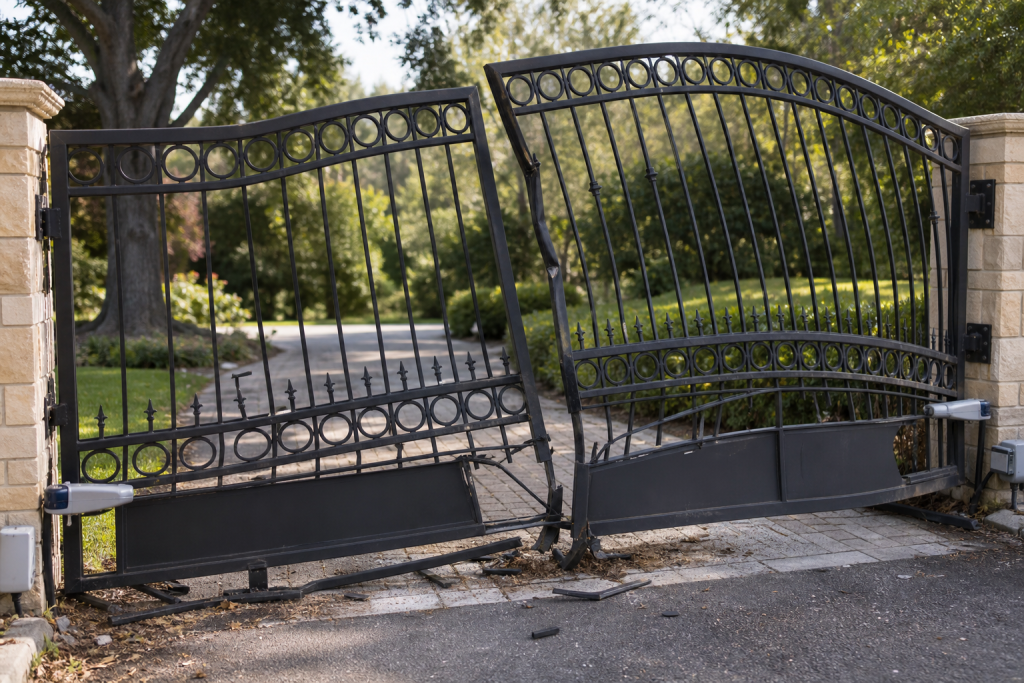
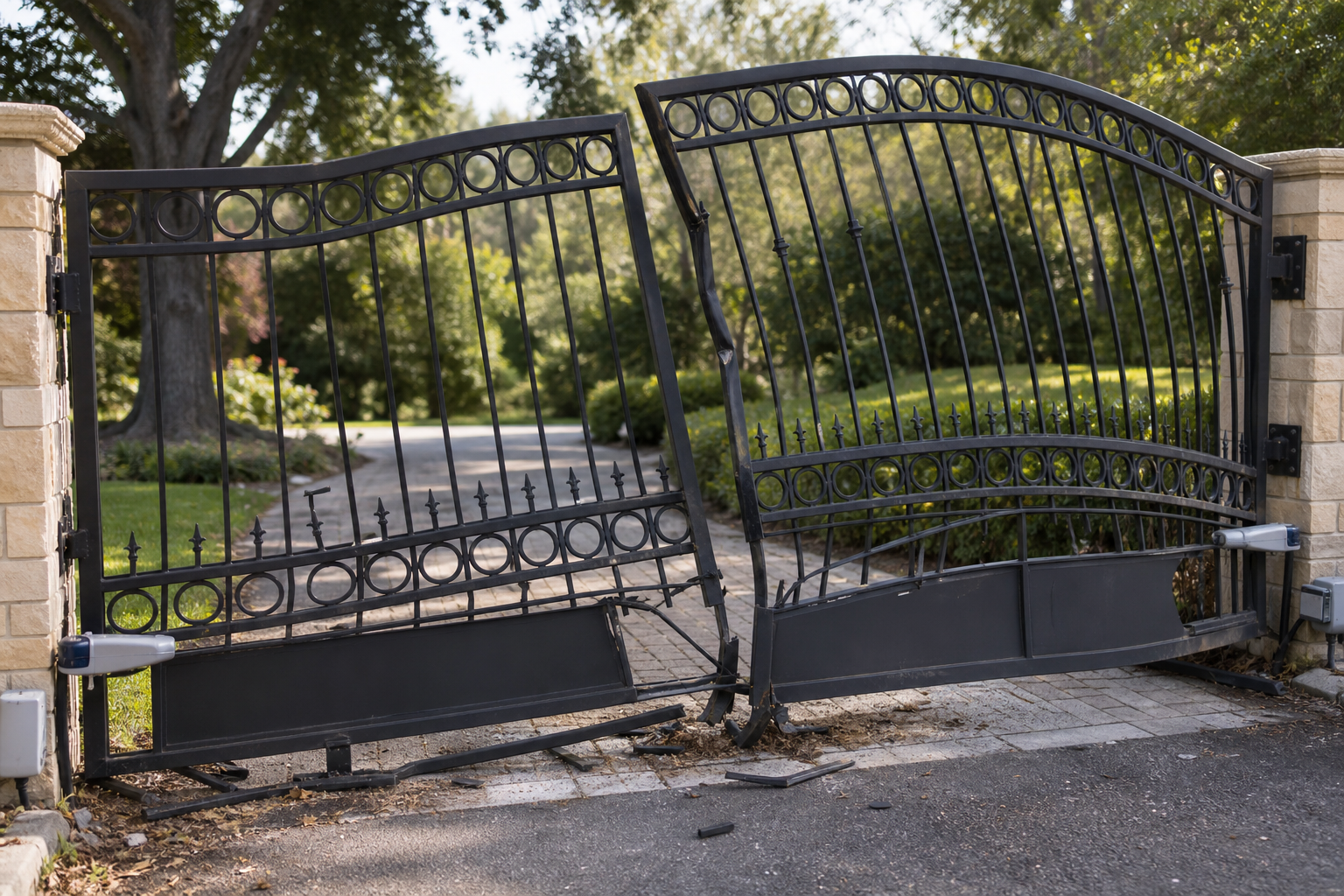
- Gate Falling or Unstable: If your gate appears to be leaning precariously, if a hinge has completely failed, or if the gate itself seems unstable and could fall, stop using it immediately. This is an extreme hazard that can cause serious injury or damage. This is particularly concerning with heavier ornamental gates.
- Operator Overheating or Smoking: While some operator strain can cause hesitation, if you notice the operator unit itself is excessively hot to the touch, or worse, emitting smoke, shut off the power to the gate immediately. This indicates a severe electrical or mechanical failure within the motor that could pose a fire risk.
- Erratic or Unpredictable Movement: If your gate opens or closes partially on its own, moves erratically without command, or stops and starts randomly, it could indicate a control board issue or a problem with the safety features. This unpredictability is dangerous.
These are not issues to wait on. Your gate’s primary function is security and controlled access, but safety must always come first. If you notice any of these signs, don’t try to force the gate or assume it will fix itself. We’ve been called out to emergency situations in Sacramento where a minor delay in addressing a safety issue could have led to a serious accident. It’s always better to err on the side of caution and call a specialist.
When to Call a Pro
While some gate issues might seem minor, many of the signs we’ve discussed — especially those involving unusual noises, hesitation, or visible instability — point to underlying mechanical or electrical problems. Attempting complex repairs without the right knowledge and tools can sometimes worsen the problem, lead to injury, or damage expensive components like your gate operator. If you’re not comfortable diagnosing these issues, or if you suspect a safety hazard, it’s always best to call a professional gate repair service.
Related Services in Sacramento
Next Gen Gate Repair Sacramento offers a full spectrum of gate services, including comprehensive gate repair, expert gate installation, and specialized gate motor and opener service across the region.
What happens when you call
- 1
A real person answersNo phone trees — you reach a local pro.
- 2
You get an upfront price rangeHonest numbers before anyone is dispatched.
- 3
A background-checked tech heads outLicensed & insured, dispatched right away.
- 4
You approve before work beginsNothing starts until you say go.
The Bottom Line
Pay attention to the subtle (and not-so-subtle) cues your gate is giving you. Unusual noises, hesitation before movement, or visible leaning aren’t just minor annoyances; they’re often early warnings of mechanical stress or foundational issues that, if ignored, can lead to more significant and expensive repairs. Understanding the difference between a simple fix and a critical safety concern is what turns a preventable $200 repair into a much larger, more disruptive problem. We’ve been helping Sacramento homeowners and property managers keep their gates secure and functional for over 11 years, and Gary Young still personally leads many of our jobs as Lead Technician, bringing that hands-on expertise to every situation.
If you’re in Sacramento and need help identifying or fixing these gate issues, Next Gen Gate Repair Sacramento offers free estimates. Call us today at (279) 239-2652 to schedule a visit.
Frequently Asked Questions
Signs your gate opener might be failing include slow or hesitant movement before it begins to operate, excessive noise like grinding or straining, overheating of the motor unit, or completely erratic behavior like opening/closing on its own. These often indicate internal wear or electrical issues within the operator itself, and you should call (279) 239-2652 for a professional assessment.
It’s typically cheaper to repair a gate if the issue is with a specific component like a motor, sensor, or a bent track. However, if the gate structure itself is severely damaged, or if multiple major components have failed, replacement might be more cost-effective in the long run. We always assess your specific situation in Sacramento to recommend the most economical and reliable solution, often fabricating parts in-house to save you money.
A grinding noise from your gate usually means metal-on-metal contact that shouldn’t be happening. This could indicate worn or damaged gears inside the gate operator, a roller that’s off its track and rubbing, or debris lodged in a critical moving part. This type of sound suggests a mechanical issue that needs immediate attention to prevent further damage; call (279) 239-2652 for an inspection.
Yes, a gate can sag due to issues completely separate from the operator. Common causes include failing or rusted hinges, a gate post that has shifted or settled in the ground, or structural damage to the gate frame itself. This sag can then put extra strain on the operator, causing it to struggle and potentially fail, but the root cause is the gate’s support or structure. We can diagnose these issues in Sacramento and provide solutions.
Reviewed by Gary Young, Owner & Lead Technician at Next Gen Gate Repair Sacramento, serving Sacramento since 2015.
Need Gate Repair Help?
Call Next Gen Gate Repair Sacramento — licensed & insured, here with fast after-hours help in Sacramento.
(279) 239-2652