
DIY vs. Professional Gate Repair: What Sacramento Homeowners Should Know
Swapping out a rusty hinge or tightening a loose bolt on your gate can feel like a satisfying Saturday morning project. But when it comes to adjusting the travel limits on your gate operator, or troubleshooting a faulty safety sensor, what seems like a simple fix can quickly turn into a costly mistake. In Sacramento, where our unique climate and soil can impact gate performance, understanding what you can safely tackle yourself versus when to call a professional like Next Gen Gate Repair Sacramento is crucial for both safety and your wallet.
The True DIY Gate Repair Scope for Sacramento Homes
Let’s be clear: not all gate repairs are created equal, and many are perfectly within the reach of a determined Sacramento homeowner. If your issue involves purely mechanical, non-powered components, you’re likely in the clear to grab your toolbox. This includes things like replacing a standard gate latch that’s gone stiff, tightening loose bolts on hinges or rollers, or lubricating squeaky parts. We’ve seen many instances over our 11 years in Sacramento where a homeowner has successfully replaced a simple gate wheel or re-hung a gate that had sagged slightly due to its own weight, not structural issues. These tasks require basic tools and a bit of elbow grease, but they don’t involve the complex electrical systems or safety mechanisms that define automated gates. For example, if a manual gate simply won’t swing open because the latch is stuck, that’s a prime candidate for DIY. Similarly, if you notice surface rust on a metal gate post in a neighborhood like Land Park, a bit of sanding and a fresh coat of paint can prevent it from becoming a bigger structural problem down the line. These are the types of repairs that don’t pose a risk of injury or damage to the gate system itself, making them ideal for a hands-on approach.
When Gate Automation Gets Complicated: The Professional’s Domain
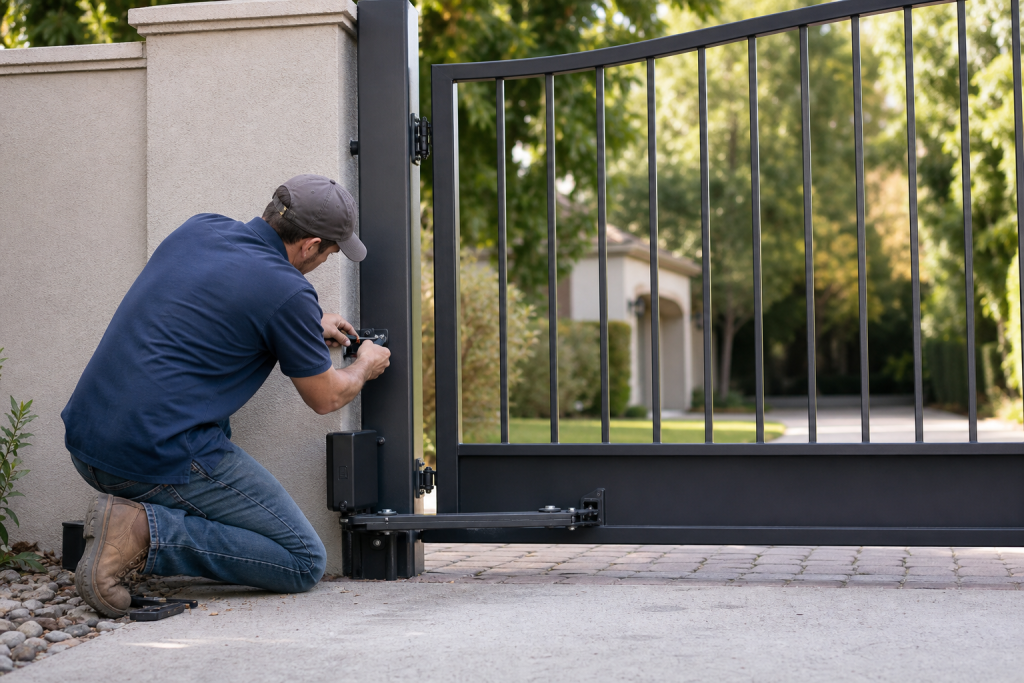
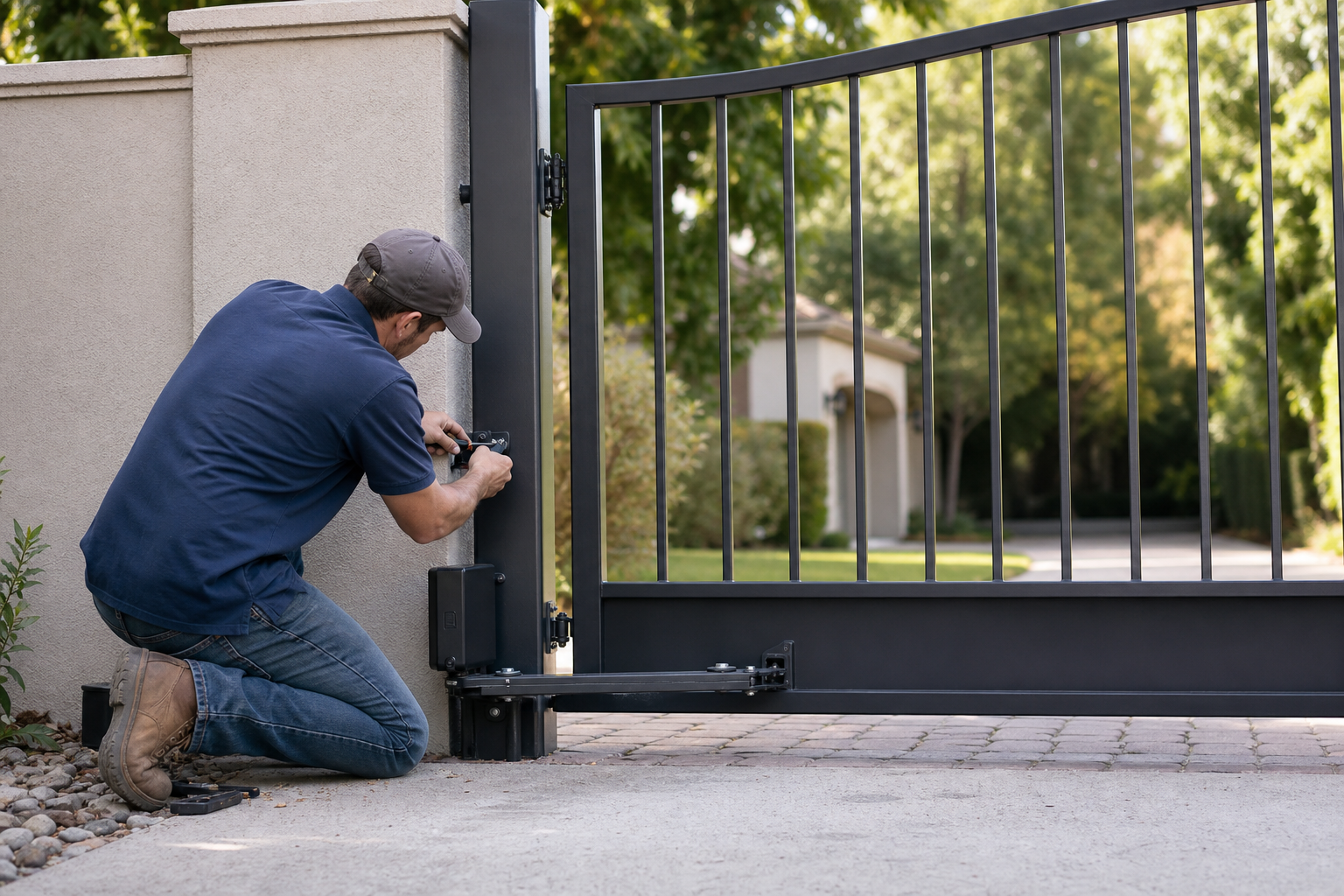
The moment your gate system involves electricity, sensors, or calibrated tension, it’s time to step back and consider calling a professional. This is where the risk of serious damage or injury significantly increases, and frankly, it’s where many DIY attempts go sideways. For Sacramento homeowners, understanding these critical areas is paramount. First and foremost are the gate operator’s internal settings: travel limits and force adjustments. These aren’t just arbitrary dials; they dictate how far the gate opens and closes, and how much force it applies. If these are set incorrectly, the gate could stop mid-way, fail to close completely, or worse, exert excessive force. We’ve seen situations, particularly in areas with shifting clay soil like parts of East Sacramento, where a homeowner might try to adjust the gate’s alignment by fiddling with the operator settings, not realizing the underlying structural issue. This can lead to a burned-out motor, damaged gate tracks, or even entrapment hazards. Entrapment safety systems, like photo eyes or loop detectors, are also non-negotiable for professional attention. These are designed to prevent the gate from closing on a car, person, or pet. Attempting to bypass or improperly adjust these can have severe consequences. For instance, if your LiftMaster or Viking gate opener starts acting erratically, it’s usually a sign that its internal programming or safety features need expert calibration, not a DIY fix.
The Grey Zone: Where DIY Needs Caution
There’s a middle ground in gate repair where some tasks might seem DIY-friendly but carry hidden risks. These often involve components that are accessible but still connected to the gate’s operational system. For example, replacing a gate motor or an access control keypad. While you can physically unscrew an old unit and screw in a new one, wiring it correctly, especially if it’s a different brand than your existing system (like switching from a Linear to a Ghost Controls opener), requires a specific understanding of low-voltage wiring diagrams. Incorrect wiring can not only fry the new component but can also create electrical hazards. Similarly, if you have a DoorKing or BFT intercom system that’s malfunctioning, troubleshooting the wiring or signal transmission is best left to technicians. We often encounter situations in Sacramento where a homeowner has replaced a faulty sensor only to find the problem persists because the issue was with the control board or the wiring to the sensor, not the sensor itself. The key here is to assess if the repair involves anything beyond simple mechanical fastening or lubrication. If it involves electrical connections, programming, or anything that directly impacts the safety or movement of the gate, it’s best to err on the side of caution and consult with a specialist.
Sacramento’s Soil and Gate Alignment: A DIY Pitfall
Sacramento’s unique geological makeup, particularly its expansive clay soils, can play a significant role in gate performance and the temptation for DIY fixes. Over time, this soil can shift and expand or contract with moisture levels, causing foundations to move. For gates, this often manifests as alignment issues: a gate that used to swing freely might start to drag, or a sliding gate might become difficult to move. A homeowner might see this and think, “Ah, the gate just needs to be re-leveled,” and attempt to adjust it themselves. While sometimes a simple hinge adjustment is all that’s needed, more often in Sacramento, a dragging gate is a symptom of a foundation or post that has shifted due to soil movement. If you try to compensate for this by simply adjusting the gate’s physical position without addressing the underlying cause, you’re only masking the problem. This can lead to increased stress on the gate’s hardware, the operator motor, and its internal components. Eventually, the masked issue will cause a more catastrophic failure, requiring more extensive and costly repairs than if it had been diagnosed correctly from the start. For instance, if your FAAC or Mighty Mule gate opener seems to be working harder than usual, it might not be the opener itself, but rather the gate’s alignment being thrown off by soil-induced structural shifts. This is why we always perform a thorough assessment of the entire gate system, including its foundation, when addressing alignment concerns in Sacramento.
The Cost-Benefit Math of DIY vs. Professional Gate Repair
It’s easy to think that tackling a gate repair yourself will always be cheaper. And sometimes, for very simple tasks, it is. However, the cost-benefit analysis can quickly shift when a DIY attempt leads to further complications. Let’s say you’re trying to fix a gate operator that’s not responding. You spend $50 on a diagnostic tool and a few hours researching online. If you misdiagnose the problem and end up ordering the wrong part, that’s another $100-$200 wasted. If your incorrect adjustment then causes the motor to overheat, a replacement motor could cost $500 or more, plus the original repair cost you were trying to avoid. In contrast, calling a professional like Next Gen Gate Repair Sacramento for an initial assessment might cost a service call fee (which is often applied to the repair cost), but Gary Young, our owner and lead technician, has 11 years of hands-on experience diagnosing these issues correctly the first time. He can often pinpoint the problem within minutes. For example, a homeowner trying to fix a slow-moving gate might spend $150 on parts and a weekend of frustration, only to find they still need to call us. If our diagnosis reveals a minor issue that would have taken us an hour to fix, the homeowner has effectively paid more in time and parts for a repair that wasn’t fully successful. This is particularly true when dealing with specialized brands like Elite or DoorKing, where parts and troubleshooting knowledge are more niche. The real cost of a DIY mistake isn’t just the money spent on incorrect parts or additional repairs; it’s also the lost time and the potential safety risks involved.
Three Essential DIY Gate Maintenance Tasks for Sacramento Homeowners
While we always recommend professional help for complex repairs, there are definitely proactive maintenance tasks that Sacramento homeowners can and should perform to keep their gates in top shape and reduce the frequency of service calls. These simple steps can extend the life of your gate system and prevent minor issues from becoming major ones. First, regularly clean and lubricate moving parts. This includes hinges, rollers, and any visible mechanical joints. A good quality lubricant can prevent rust and ensure smooth operation, especially important in our varied Sacramento weather. Second, keep the gate tracks clean. For sliding gates, debris like dirt, leaves, or small stones can accumulate in the track, causing it to bind or strain the operator. A simple broom or even a leaf blower can do wonders here. Third, visually inspect your gate and its components periodically. Look for any loose bolts, obvious signs of rust or damage, or unusual noises when the gate operates. Catching a loose bolt or a small rust spot early is far easier and cheaper to fix than addressing a gate that has detached or a motor that has been strained by a misaligned track. Performing these three simple tasks can significantly reduce wear and tear on your gate system, whether it’s a LiftMaster, FAAC, or any other brand, and help ensure it operates reliably for years to come.
The Bottom Line
Deciding between DIY and professional gate repair in Sacramento boils down to risk assessment and expertise. Simple mechanical fixes are generally safe for homeowners, but anything involving electrical wiring, safety sensors, or calibrated operator settings should be handled by a qualified technician. Attempting complex repairs can lead to costly mistakes, damage to your gate system, and potential safety hazards. When you’re unsure, or if the problem involves the automated components of your gate, it’s always best to call in the experts. If you’re in Sacramento and need help diagnosing a gate issue or want to ensure a repair is done safely and correctly, Next Gen Gate Repair Sacramento offers free estimates. Call us today at (279) 239-2652.
Frequently Asked Questions
Yes, replacing a broken gate latch is generally a straightforward DIY task for Sacramento homeowners. As long as it’s a purely mechanical latch and doesn’t involve any electrical components, you can typically unscrew the old one and install a new one with basic tools. If you’re unsure, Next Gen Gate Repair Sacramento can help. For an exact quote on latch repair or replacement, call us at (279) 239-2652.
The cost to repair a gate operator in Sacramento can vary significantly, typically ranging from $250 to $800, depending on the issue and the brand of the operator. Simple programming or minor adjustments might be on the lower end, while replacing a motor or complex control board will be on the higher end. For a precise estimate, it’s best to have a technician assess the problem. Call Next Gen Gate Repair Sacramento at (279) 239-2652 for a free estimate.
You should call a professional for gate repair if your issue involves any electrical components, safety sensors, the gate operator’s programming (like travel limits or force settings), or if you suspect a structural problem related to Sacramento’s soil movement. Attempting these repairs without the right knowledge can be dangerous and lead to more expensive damage. If you’re in Sacramento and need expert assistance, call Next Gen Gate Repair Sacramento at (279) 239-2652.
It’s often cheaper to repair a gate opener in Sacramento if the issue is minor, such as a faulty circuit board or a worn-out gear. However, if the motor is severely damaged or the entire unit is outdated and prone to future failures, replacement might be more cost-effective in the long run. We always assess the situation to recommend the most economical solution for you. For a free estimate on whether to repair or replace your gate opener, call Next Gen Gate Repair Sacramento at (279) 239-2652.
Reviewed by Gary Young, Owner & Lead Technician at Next Gen Gate Repair Sacramento, serving Sacramento since 2015.
Need Gate Repair Help?
Call Next Gen Gate Repair Sacramento — licensed & insured, here with fast after-hours help in Sacramento.
(279) 239-2652